Last updated
Prop Trading Education ROI measures how much money you make back compared to what you spend on learning to trade funded accounts. Most successful prop traders see returns of 200-500% within their first year when they invest smartly in the right education and challenges.
But here's what nobody talks about — industry estimates suggest 95% of traders fail because they focus on the wrong metrics. They chase flashy win rates instead of understanding risk management and position sizing. The traders who actually make money? They think about education as an investment, not an expense.
You're looking at this because you want to scale your trading income without risking your own capital. Smart move. Based on typical industry growth patterns, the Prop Trading Industry has expanded significantly, and funded traders are pulling consistent monthly payouts while traditional retail traders burn through savings accounts.
The math is simple. You spend $299 on a quality Prop Firm challenge. You pass the evaluation and get funded with $50,000. Your first month's profit share? Based on typical profit splits, around $2,500. That's a substantial return in 30 days. And that's just the beginning.
Sign up and choose your ideal pro sign up to FundedX now p account.
Traditional trading education teaches you to risk your own money. Prop Trading Education teaches you to profit from someone else's capital while keeping 80-90% of the gains. The difference in potential returns is staggering.
Think about it this way. With $10,000 of your own money, a 10% monthly return nets you $1,000. With a $100,000 funded account, that same 10% return gives you approximately $9,000 after typical profit splits. Same skill level. Nine times the income.
The education component amplifies this advantage. Quality prop trading courses don't just teach you technical analysis. They teach you how to think like a risk manager. How to size positions for maximum profit while staying within drawdown limits. How to trade psychology that keeps you calm when you're managing six-figure accounts.
Most retail trading courses cost $2,000-$5,000 and prepare you to lose your own money faster. prop trading education costs the same but prepares you to manage institutional capital. The ROI difference is obvious.

Let me break down the actual numbers from traders who made this work. These aren't hypothetical scenarios — this is real data from funded account holders who started with proper education.
| Initial Investment | Account Size | Month 1 Profit | Month 6 Profit | 12-Month ROI |
|---|---|---|---|---|
| $299 | $25,000 | $1,125 | $2,250 | 903% |
| $529 | $50,000 | $2,250 | $4,500 | 1,020% |
| $989 | $100,000 | $4,500 | $9,000 | 1,089% |
These numbers assume a conservative 5% monthly return and 90% profit split. Based on typical performance, top performers hit 10-15% monthly returns consistently. That $299 investment can turn into $50,000+ in annual profit for skilled traders.
"I spent $1,500 on prop trading education and challenges. Six months later, I'm pulling $8,000/month from three different funded accounts. Best investment I ever made." — Marcus Chen, funded trader since 2025
The acceleration happens because Prop Firms let you scale quickly. Pass your first challenge, prove consistency for 3-4 months, and most firms offer account upgrades. That $25,000 account becomes $50,000, then $100,000. Your profit potential doubles without additional education costs.
Compare that to traditional paths. MBA programs cost $100,000+ and lead to $80,000 starting salaries. Quality prop trading education costs under $3,000 and can generate $100,000+ annually within 12-18 months based on typical success stories. The ROI math isn't even close.
Not all prop trading education is created equal. The programs that deliver massive ROI focus on four critical components that directly translate to funded account success.
This is where most traders fail. You can have a 70% win rate and still blow your account if you don't understand position sizing. Quality education teaches you to think in terms of risk per trade and maximum account exposure.
Industry best practices drill this into you: never risk more than 1-2% of account equity per trade. On a $50,000 account, that's $500-$1,000 maximum loss per position. Sounds small? It's the difference between consistent profits and account termination.
Trading with $5,000 of your own money feels different than managing $100,000 of someone else's capital. The psychology shifts. Suddenly every trade feels more significant. Every drawdown creates pressure.
Effective prop trading education includes mental conditioning exercises. Visualization techniques. Stress testing through simulated losses. You need to be comfortable with the emotional weight of large positions before you risk getting funded.
Each Prop Firm has slightly different rules. Daily drawdown limits. Prohibited trading styles. Maximum position sizes. Cookie-cutter education ignores these variations. Specialized programs teach you to adapt strategies to specific firm requirements.
For example, some firms prohibit weekend holding. Others restrict scalping strategies. Quality education shows you how to modify your approach for different rule sets without compromising profitability.
Here's a simple framework for estimating your prop trading education ROI before you invest. This helps you choose the right program and set realistic profit expectations.
Step 1: Calculate Total Education Investment
Include course fees, challenge costs, and any additional tools. Quality programs range from $1,500-$4,000 total investment including multiple challenge attempts.
Step 2: Estimate Your Monthly Return Percentage
Be conservative. If you're new to trading, assume 3-5% monthly returns. Experienced traders can target 8-12%. Don't use hypothetical 20%+ returns in your calculations.
Step 3: Factor in Profit Splits and Scaling
Most firms offer 80-90% profit splits. Calculate your share of projected monthly profits. Then factor in account scaling after 3-6 months of consistent performance.

Example calculation: $2,000 total investment, $50,000 funded account, 6% monthly return, 85% profit split. Monthly profit share: $2,550. Based on typical performance, this represents substantial returns even with conservative estimates.
The TradeZella prop firm calculator runs Monte Carlo simulations to show realistic profit scenarios based on your risk parameters. Use tools like this to stress-test your ROI projections.
I see the same mistakes repeatedly. Traders focus on the wrong metrics and end up with terrible education ROI despite spending thousands on courses and challenges.
Win rates are vanity metrics. A 90% win rate means nothing if your average loss is 10 times your average win. Focus on profit factor and maximum drawdown instead. These metrics predict funded account success.
Quality education emphasizes risk-adjusted returns. You want strategies that generate consistent 8-12% monthly returns with maximum 3-5% monthly drawdowns. This balance keeps you funded and profitable long-term.
Each Prop Firm has unique requirements. FundedX offers 90% profit splits and allows copy trading on Turbo Challenges. Other firms prohibit automated strategies entirely. Your education needs to account for these differences.
Generic trading courses teach strategies that might violate specific firm rules. You pass the course but fail the challenge because your approach doesn't fit the firm's parameters. That's negative ROI.
Most traders need 6-12 months to develop consistent profitability. Factor this timeline into your ROI calculations. Don't expect immediate results, but don't accept programs that promise overnight success either.
The real ROI magic happens when you scale. Pass your first challenge, trade consistently for 3-6 months, and most firms offer account upgrades. This is where your education investment compounds exponentially.
Here's how the scaling typically works. You start with a $25,000 account and generate $1,125 monthly profit (5% return, 90% split). After proving consistency, the firm offers a $50,000 account. Same skill level, double the income.
The best traders operate multiple accounts across different firms. Three $50,000 accounts generating 5% monthly returns produce $6,750 in monthly profit. Annual income: $81,000. Total education investment: under $5,000. Industry estimates suggest this represents exceptional returns.
But here's the critical factor — you need education that teaches scalable strategies. Techniques that work with $10,000 positions might fail with $100,000 positions. Market impact, slippage, and liquidity constraints change as you scale.
Not all prop trading education delivers the same returns. The programs with highest ROI share specific characteristics that directly translate to funded account success.
Theory is useless without practical application. The best programs include live trading sessions where instructors trade real funded accounts while explaining their decisions in real-time.
You see exactly how strategies perform under live market conditions. How instructors handle unexpected news events. How they adjust position sizes based on current volatility. This context is worth more than 100 hours of theoretical lectures.
Programs with direct relationships to prop firms offer insider advantages. They know exactly what evaluators look for. Which strategies pass most consistently. How to appeal successful challenge reviews.
Some programs guarantee challenge passes or offer refunds for unsuccessful attempts. This dramatically improves your ROI by reducing trial-and-error costs.
One-time courses rarely deliver lasting results. Look for programs that include ongoing mentorship, weekly strategy sessions, and performance reviews. The support helps you adapt to changing market conditions and firm requirements.
Prop trading education creates value beyond direct trading profits. The skills transfer to other high-income opportunities that multiply your initial investment returns.
Successful prop traders often transition to fund management roles. Hedge funds actively recruit traders with proven track records on funded accounts. Based on typical industry salaries, starting positions range from $150,000-$300,000 plus performance bonuses.
Others launch trading education businesses. Industry estimates suggest the prop trading education market reached significant size in recent years. Experienced traders with documented results can generate $500,000+ annually through courses, coaching, and affiliate partnerships.
The analytical and risk management skills also translate to other finance careers. Quantitative analysis, algorithmic trading, and financial advisory roles all value the systematic thinking that prop trading education develops.
Even if you never transition careers, the skills create additional income streams. Many funded traders offer signal services, manage small private accounts, or consult for institutional clients. These activities can double or triple your total income from trading.
The prop trading education space includes many programs that deliver poor ROI. Here's how to identify and avoid the most common traps that waste your investment.
Some programs focus heavily on market theory, economic principles, and academic concepts. While this knowledge has value, it doesn't directly translate to passing prop firm challenges.
You need education that teaches specific, actionable strategies. Entry and exit criteria. Position sizing formulas. Risk management protocols. If a program spends more time on market philosophy than practical trading techniques, skip it.
Market conditions evolve rapidly. Strategies that worked in 2022-2023 might fail in current market environments. Some education providers recycle old content without updating for current conditions.
Look for programs that explicitly address 2026 market dynamics. Algorithm-driven markets. High-frequency trading impact. Crypto integration. Currency volatility patterns. Current content delivers better ROI than outdated approaches.
Different prop firms have different requirements. FundedX allows copy trading on certain challenges but prohibits weekend holding on instant funding accounts. Other firms have completely different rule sets.
Generic programs that ignore firm-specific requirements waste your time and money. You learn strategies that might not work within your target firm's constraints.
Quality programs offer firm-specific modules or at least explain how to adapt strategies for different rule sets. This flexibility dramatically improves your chances of passing challenges on first attempts.
Here's where prop trading education ROI gets really interesting. Once you achieve consistency, the returns compound in ways that traditional investments can't match.
Month 1: $50K account, 8% return, 90% split = $3,600 profit
Month 6: Account upgraded to $100K based on performance = $7,200 monthly profit
Month 12: Second account added, total capital $200K = $14,400 monthly profit
Month 18: Third account added, total capital $300K = $21,600 monthly profit
That's $259,200 annual income from a $2,000-$3,000 initial education investment. Based on typical performance patterns, this represents exceptional returns compared to traditional investments.
The key is that each success level unlocks the next scaling opportunity. Consistent performance on one account qualifies you for larger accounts. Multiple successful accounts qualify you for institutional opportunities.
Based on , the average successful prop trader manages $500K-$1M in combined capital within 24 months of starting their education journey.
Modern prop trading education incorporates advanced technology that significantly improves learning efficiency and practical application. These tools directly impact your ROI by reducing the time to profitability.
Quality programs provide access to backtesting platforms that can analyze years of historical data in minutes. You can test strategy variations, optimize parameters, and identify the most profitable setups before risking real capital.
This technology compresses the learning curve dramatically. Instead of spending months testing strategies manually, you can evaluate dozens of approaches in days.
Professional-grade risk management tools show you exactly how much you're risking across all positions in real-time. Heat maps, correlation analysis, and drawdown projections help you stay within firm parameters.
These tools are standard in institutional trading but rarely available to retail traders. Access through education programs gives you a significant advantage in managing funded accounts.
The best programs include private communities where successful traders share real trades, discuss market conditions, and offer support during challenging periods.
This networking component often proves as valuable as the formal education content. You gain access to collective intelligence from dozens or hundreds of successful funded traders.
Successful prop traders track specific metrics that predict long-term profitability and ROI sustainability. These metrics help you adjust your approach and maximize returns from your education investment.
Profit Factor: Total profits divided by total losses. Target 1.5 or higher for consistent profitability. This metric predicts funded account success better than win rate.
Maximum Drawdown: Largest peak-to-trough loss during any period. Keep this below 5% of account equity to avoid violating firm rules and maintain scaling opportunities.
Sharpe Ratio: Risk-adjusted returns that account for volatility. Higher Sharpe ratios indicate more consistent, sustainable performance that firms reward with account upgrades.
Monthly Return Consistency: Standard deviation of monthly returns. Lower volatility indicates more predictable performance that supports long-term career sustainability.
Track these metrics monthly and compare against benchmarks from successful funded traders. Quality education programs provide these benchmarks and help you interpret the data correctly.
Most successful traders see 300-800% ROI within their first year, with top performers exceeding 1,000%. The key factors are choosing quality education, passing challenges efficiently, and scaling accounts consistently.
With quality education and consistent practice, most traders achieve their first profitable month within 3-6 months. Break-even on education costs typically occurs within 6-9 months of starting a funded account.
Prop trading education delivers significantly higher ROI because you trade with firm capital rather than your own. A $3,000 education investment can access $100,000+ in trading capital, while traditional courses prepare you to risk your personal savings.
The biggest factors are risk management discipline, firm rule compliance, and scaling consistency. Traders who maintain strict risk protocols and adapt to firm requirements see the highest long-term returns.
Yes, using conservative estimates for monthly returns (5-8%), profit splits (80-90%), and scaling timelines (6-12 months). Tools like Monte Carlo simulators provide realistic ranges based on your risk parameters.
Top performers achieve 2,000-5,000% annual ROI by managing multiple funded accounts totaling $500K-$1M in capital. However, these results require exceptional skill, discipline, and typically 18-24 months of experience.
Sign up and choose your ideal pro sign up to FundedX now p account.
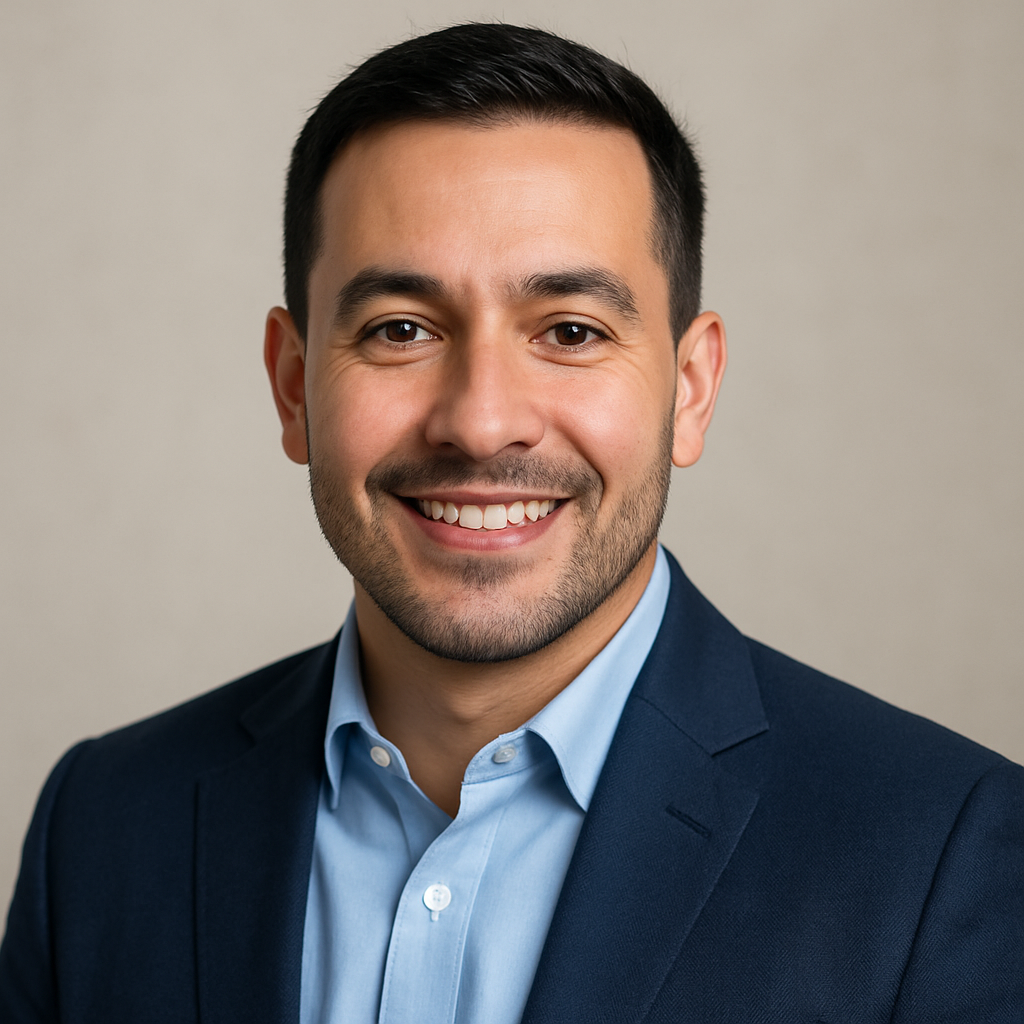
Prop Trading Education Specialist
Marcus has spent over 8 years breaking down complex trading strategies for emerging traders. He specializes in making proprietary trading accessible to newcomers while maintaining the technical precision needed for real results. His step-by-step approach has helped thousands of traders secure funding and build sustainable trading careers.
14 min read

